Tuesday, 25 November 2014

Money

For Alone 2 we built an alien queen. The event ran in February. We spent about 5 months building her, and working out the frame she was based on took weeks. We also spent several hundred pounds on materials. She was amazingly effective for that event. She was totally worth the investment. She was used at Alone 3 and Alone 4, but is not mostly static. We could make her walk again, but I suspect we'd rather put the work into something new.

We usually start with an idea, some things we want to see, and then move onto a 6 word story. You can create a 6 word story for most events. They're just a way of getting it clear what everyone involved in writing thinks is important. It probably doesn't matter if you're working from different viewpoints, as long as you know you are. We use Google Docs for most things. We take a colour each and have a single plot document that we all add to. Separately we'll start working out what we have to spend, and how we plan to spend it. We'll look at 3-4 different ticket prices and often a couple of sets of player to crew ratios to work out what we need to run the event, and where we can afford to compromise. 

Baby ducks


We have previously run events that have gone over budget by several thousand pounds. We can't afford to do that now, so we need to have a realistic idea on costs and have managed to come in on budget on a couple of occasions. This does mean that we need every player to pay before the event. We normally can't accept cash on the gate because we've spent the money by then. It also means that for our events we don't offer refunds.

We've got a quite varied audience. We charge a lot (£150 a weekend for Alone) but we feel we charge about the right amount. We're aware some people can't afford to pay that for tickets. That's okay. They don't have to. 

We typically work with a spreadsheet ( version of the Dark Hearts one) Huge amounts of useful information goes into this. It gives us a central place to look at budgets, prop lists, player lists, crew lists, dietary information etc. We'll also have a plot document. I also want to share an Alone 4 summary document. It bears little resemblence to the event we ran. Plot documents never do. I can't show you Dark Hearts as that is ongoing. We have piles of other documents that detail each character, or each scene and what we need to set it. Once we've written everything we show the plot doc to Humpo who declares it 'rubbish' and rewrites it as something that will work. 

It's a short post today, but those two documents add a fair amount of extra reading. We need to know what we're willing to spend, and it's hard to break even whilst still pulling off the best event we can achieve. We're often hit by last minute costs that are hard to account for (fuel for the generator at Drakelow was a lot more than we anticipated).


Saturday, 22 November 2014

Trust

We trust our players. We trust them not to take the piss, not to be dicks. We trust them not to book when they're not going to enjoy our game. We trust them not to make the game miserable for other players, and to help build and support the game environment. 

We also trust them to break the rules. To do what's best for the game even if it's not what we've said they should do. 

Any rule should be there to make the game better. To enable players to do something they could not otherwise do. Doing away with rules about death and dying doesn't stop death happening. If it did I would expect Alone games to have had a lot more survivors even if they were still stuck on alien strewn moons. Instead it makes death occur as and when the players decide. 

LRP is odd in that it's often without long term injury (ic). It takes a certain type of person to pretend to have a debilitating injury and enjoy it. It's unfair to hoist that on someone who isn't willing. If you give people the chance to be miserable they often will. Different groups of players enjoy role playing the effects of injury for different amounts of time. With ours, they've signed up for an action game, so I suspect they're not that likely to expect us to subject them to spending 40-50 minutes injured. 

Two metal herons outside a building


We've used games to represent the medic skill. Computer games where doctors had to balance how much of various drugs they were giving a patient in order to keep them alive. It was possible for the patient to die, but the patient had by this point decided they were seriously wounded, and it did lead to nice levels of panic. 

Trust is good. Systems that allow players to decide what's happening encourage mature roleplaying and makes it more about the game and less about 'winning'. LRP is collaborative. We're all working together to create a game. When you pay us for a ticket you're not paying for entry into a competition, you're paying for your share of the costs of running that game. It's the same as paying for your round at the pub. 

Winning is about the stories. My winning is hearing people tell other people about games I've been involved in. I love knowing that things that I've made happen, plot that I've written or discussions about rules that I've had have given people stories that they're telling to their friends years after they happened, or even that people are passing on as something they've heard about. We aim to do things that are considered beyond normal. LRP is good, but it can be better. I love the traditional games, but I want to run something different. I want to see if we can improve things.

I need to convince Matt P to let me rig his new site with gimbals. So I'm going to finish this here. I've got events for the next three weekends (Gunfest, Red Letter day and the lions banquet) and then I'll be working on Jurassic LRP over Christmas, so get building your dinosaurs. I expect you all to be there.


Friday, 21 November 2014

Augmented Reality

I quite like games that extend beyond the period that people are together, but I appreciate that that is a lot of effort for the people organising the game. 

We don't run those games. The games we run are nicely contained, with minimum preamble and nothing after because usually everyone is dead. I like the idea that the games start with a bang and usually that bang is the point where people find out what's happening (at least for the first part of the game). We'll give them enough information to write a character, and find some stats, and that's pretty much it until they turn up. 

Footprints in the sand


It takes an immense amount of work to do anything personalised before an event. It will take longer than you think. if you only spend 10 minutes a player and have 20 players then you're already looking at over three hours, and you've just about read their backgrounds. You've not included them in anything you're writing. You've not looked at ways to link them together with other players. That's all extra. We normally run with 40-60 players (for Alone). 

I've been thinking about augmented reality today. My day job involves training people to use software, and I'm fairly certain we can improve take up and accessibility using technology. We can use the same technology to blur the lines between LRP and events, and the real world. Games like Ingress are a form of LRP. You're pretending to be in a situation and playing with that to achieve targets. For some events these same technologies can be used to get information to players, either before the event, or during time in.

With Alone we wanted to be able to give the players a way that they could see the Aliens approaching them on a scanner. This is probably something we could do now. We'd need to build units into the costumes that the players could detect using smart phones or computers. If you're running a modern day event that requires players to travel to sites to gather information you can share that information with devices such as Gimbals.

LRP has fuzzy boundaries. A lot of the definition is based on experience. I would really love to see a sci-fi fest event. Now Matt has announced his permanent site we can begin looking into running one again. If he does run one then we'll need to investigate how these technologies can be used to improve our games in order that we can make sure we've got the best chance of making things work. 

It feels like there's a huge amount we now can do. We're still trying to make it actually happen.

Thursday, 20 November 2014

Coherency

Typically with LRP you’re putting your players into a situation they have to react to. Whether they’re playing good, bad or (most often) some kind of grey, there will be a circumstance (or circumstances) that they will want to change as part of the game. Ideally you'll have players with different ideas as to what should be done. Some of them may be of the opinion that they should be stopping other players changing things. There will be conflict. 

In Empire they have to fight off a threat to the Empire. They’re defending the lands they see as theirs. That’s the main threat. There’s also the internal politics. People compete for control of the political situation. The compete to make decisions go their way. There are other threads, but each is a situation that requires players to influence it in order to achieve their goals.

In modern LRP there are fewer true monsters. We are starting to include the idea of causes and effects. We can see what created a behavior or a problem. Sometimes you want something to just be bad. Other times there's a little more flexibility there. You want your players to doubt themselves. We often play with emotions. Using small delicate people as something evil tends to play with peoples expectations. Making someone who is generally pretty together appear vulnerable also makes people have to think about what they’re doing.

A lot of good plots ask players to balance several sensitive areas. By giving them several conflicting wants and needs, and not enough resources to make everyone happy you make them make choices. These are typically good choices because your players aren't trying to guess what the ref wants. They're trying to work out what they're willing to sacrifice, or what they live without. Whether they'd rather steal something in order to get what they need or if they're happier leaving the poor children hungry. Which of these is less of a moral compromise. Obviously this doesn't work if they're playing shades of grey characters, but with a mixed party it can lead to interesting turning a blind eye situations.

It’s a general rule that players will talk to the things you want them to hit and hit the things you expect them to talk to, and that this will happen whether or not you take this rule into consideration. It’s also true that the thing you absolutely do not want is your players going to interact with something and pausing to think “did they mean me to hit this or talk to it?” and you will get that. What you really are aiming for is players that will react naturally to whatever situation is thrown at them, and just as in real life that can be a wee bit surprising. 


Bunny looking evil

Any creature the players encounter should make sense. Even if the players never find out why there should be a reason for every alien to be where it is, for each villager to be where it is, and if it is something the players can talk to the person playing it should know what that  reason  is if it makes sense that they would do so. 

My favourite games are balances. With Alone games we typically built in an escape route for about 6-8 players. Most players were going to die. There was no way out. Alone was set up to finish with a victorious death. This got very interesting in the tunnels. To keep the atmosphere we'd said they couldn't have clocks and hand crank torches only. It kept low light and meant they didn't know what the time was. One group concluded they were getting close to midnight on saturday night and that they would have to complete their objectives. They had a beautiful suicide scene. It was glorious. Unfortunately it was only about 4pm. They seemed happy with it. They knew they were very unlikely to survive and did something epic. They also felt they'd had their game.  (I only know this one from other people telling me, so accuracy is down to my notoriously dodgy memory). 

With the Alone games we didn't give everyone enough stuff to complete the survival objective. The joy was in the game, and everyone surviving wasn't  ever that high on our list of important things. It was about putting them in an environment and letting them interact. We had a few ways they could get the things they needed and a whole lot of choices about who to trust, who to shoot and who to secretly plant alien embryos in in order that you can sneak them back to your parent corp and sell them for money. It didn't matter what they spoke to and what they shot (although shooting the AI and talking to the alien was a fast route to a confusing death).  

The world you are creating needs to have some form of back story, and to hang together. It gives everyone the common threads to explain why the Montagues hate the Capulets, and helps players to see the effect their having on the world. After all, they're the god damn heroes, whether or not they all end up dead.


Wednesday, 19 November 2014

Evolution

Fest events are the hub of LRP. Not everyone goes to them, but they help to provide links between large numbers of LRPers from different systems and to help information flow around the community.

With so many people with so many different opinions and interests communication is vital. We have several large systems in this country (Summer Fest, CP, LT, Empire, The Vale…) and each has a core of its own players who may not play anything else, or may play games only attended by other members of that system.

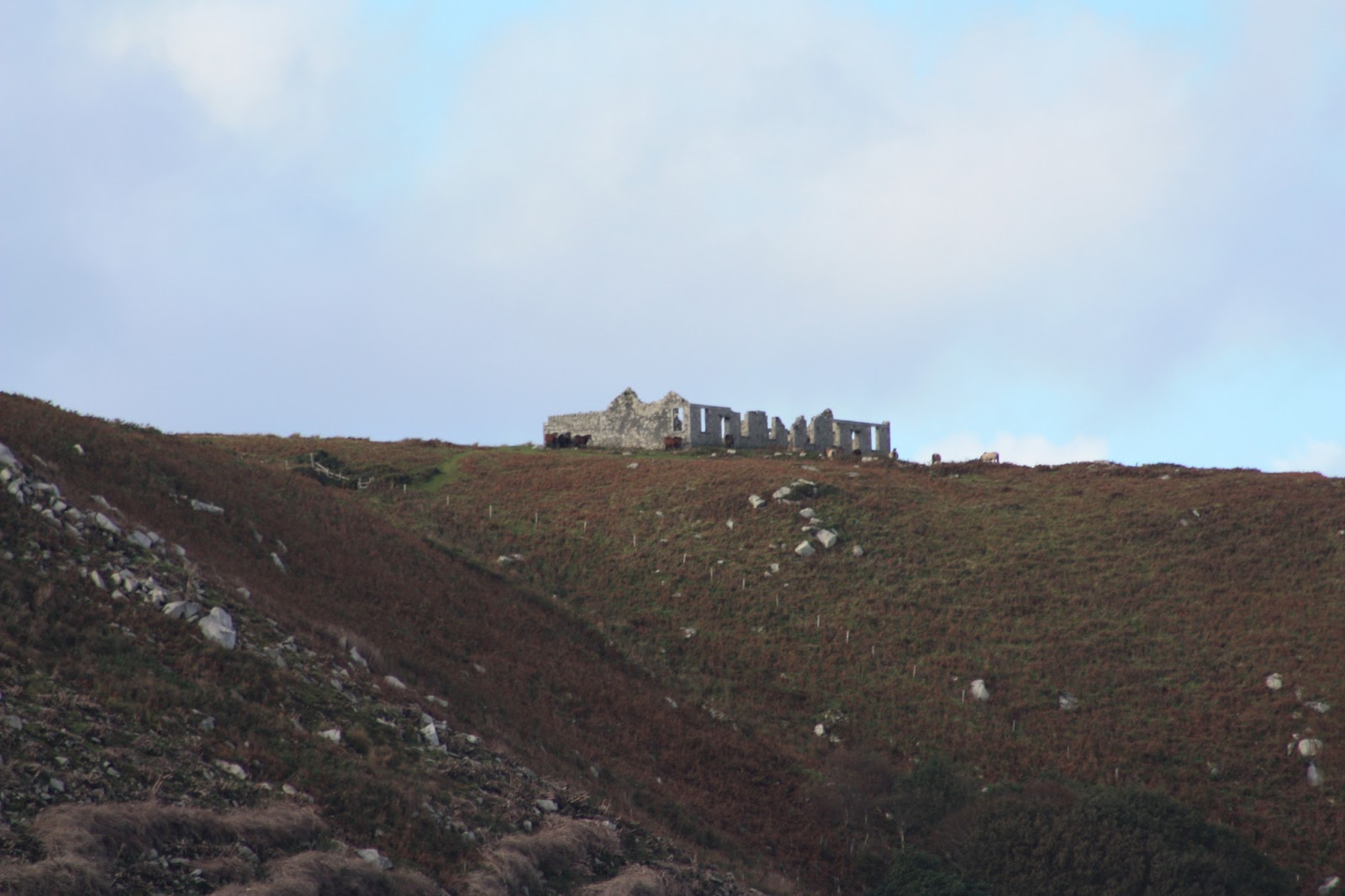
Ruined cottages on a hillside overlooking the sea, but you can't see the sea. It is there, but not in the photo.
Ruined Cottages on Lundy

There are a huge number of games in this country that I barely hear about. I used to play Skullduggery when I lived in Kent. I spoke to Dan Lagrue last night, and the games changed utterly since i was last there. So much they’re playing a different game. I hear and see images from a whole range of games that are right on the edge of the circle I interact with. They’re often things I’m not especially interested in and I mostly ignore them. Every now and then something catches my eye and if I'm free and it's within budget and other people are interested we try it. I suspect it’s similar for most LRPers.

Do we end up with a lot of similar mush? I don’t think so in the whole. We may stop one or two people from proceeding with plans, but we seem to be getting a wider and wider variety of games at the moment. I was reading about LRP in Croatia (http://www.crolarper.com) and they seem to be splitting in a similar way. LRP is evolving fast. Technology supports a much wider range of things. The LRP and AR boundaries are blurring. We have more money, a more developed idea of what's possible and more expertise that we seemed to have ten years ago when I started (I certainly have all of those things, but I've gone from being a student with limited LRP experience to this).

Whilst a lot of games emulate games that have gone before, the majority of people running games want to do better. They have ways to improve and they want to try it for themselves. Cross communication can constrict creativity (“We tried that and it didn’t work”) but with the right people running games it isn’t a major issue.A lot of people will hear that it’s been tried, consider why it didn’t work and build on that. ZapFest for us was something completely new. We had no idea if it would work. Jurassis LRP is the same. Eye LARP are running a Nutcracker inspired game (https://www.facebook.com/events/333838756796280/), which is a deviation from the normal well defined genres. We've got many more games with cinematic and trust based rules systems (again, my experience).

There is a game I wish I'd played. I often visit Lundy, an island 13 miles off Devon. There was a game that ran there that has reached almost mythical levels of awesome in my mind. I can't imagine how they pulled it off. It apparently even had underwater monsters pulling people off boats. I am aware that nothing I have run has reached that level, and that I don't know how to take what I am running to that level, but it is there as a target. One day I will be able to say that I ran something that good.

Tuesday, 18 November 2014

Ideas

 As anyone who's been around me in the last 12 months probably knows. Our next game is going to be dinosaurs. It's not the only thing we're talking about.

Mandala have been really good at Sci Fi. We're currently being really good at qwirky one offs. We don't run games that require downtimes. We don't run games that have recurring characters unless you're Jon Bliss. When I asked him if he would play his character again he told me what he wanted to have done since the last event. I had to explain that he was still in the same place in stasis and was not aware of anything since the last event. If anything he seemed more keen. 

We're still discussing what next. Slender is giving us ideas, but running something so close to what we play may not be the best immediate plan. There will be another Sci Fi game eventually. We need to get the software written before we write the game, and we'd quite like a really stunning site, but that requires a bit of looking. 

Stairs in an industrial building.


We've got one game that we've been holding onto for several years. It's a prison game. We've not yet found a prison. We've even bought and made props for it. We're holding out for somewhere perfect, so if you have a site that would make a nice sci fi prison let us know. I'd also like to run a paranoia game (who doesn't) which probably wants a similar site. 

We've talked about running something larger - a monster hunter fest game. I have some idea of the amount of work that would go into that and am absolutely certain that none of us have the time to make that happen at any point soon. 

We have also discussed shorter more intense horror games. They'd run at about 12 hours and I suspect we'd try and run twice over a weekend with lower player numbers. 

I would like to build a cube and run games for two people. Lock them in as a remote listening station for a post apocalyptic game. Make it a space station for a sci fi, or use it for a horror game. If we had a small room with a toilet that we could isolate from the workshop but that was close enough that we could use it we'd probably try that. I'm not sure how it would work, and it would take a lot of repeats for it to pay for itself, but it's something a bit different that might prove interesting to write for. 

I'd also like distributed LRP. We convince people up and down the country to convert a room to a cold war listening station. They'd need a computer and an internet connection. Then they role play according to the radio messages etc that they get. I'm not entirely sure when this stops being LRP.


I'm going to leave you with a link Paul Wilder shared with us, that I think is worth passing on. 
 Claus Raasted telling German LRPers how to get him to their games.

Monday, 17 November 2014

Strange Encounters

We write visually. We’re normally looking to produce key visual moments that the plot runs through. When we’re writing plot we will be talking about the moment the players first see the alien queen, or a player having to reach into the chest of a corpse, remove the heart, and destroy it, and we will work to make it happen. These moments are way markers. They may vanish from the final draft of the plot, but they help shape and direct what’s going to happen over the course of a weekend. Most of our events have major plot contained within a weekend.

A lot of our events are stand alone. When we’re writing for larger systems the plot will flow over a longer time period and if the players don’t reach the set scene then we’re not going to force it.With the alien queen moment we wanted her to be seen by some players and then vanish. We had tried to keep her secret and she was a lot bigger than players had any right to expect. We wanted her to become mythical, to be something that people saw and other people doubted, before the whole group could encounter her. As a result, we pictured that moment as having 5-12 players seeing her and running. With the heart scene it was going to be very intense for a small group of players, but as you added more it would work less well, so we restricted it to 5 players.

 I don’t believe that key scenes need to be seen by everyone. Each scene will have a number of people it works for, and to increase this is to dilute the effect. If you have more people than can immediately react to what is going on then there will be people stood around. With LRP often this is the point where you take the excitement and involvement that they have built up and let it drain away. It will result in a degree of disempowerment. The look of an awesome set will only occupy them for so long and then it will stop being game building. 

Hearing about something awesome happening does make people feel they’ve missed out. I heard about a lot I wasn’t involved in at Slender, and as I missed most of the key moments it changed the pace of the event for me. However, I was always somewhere else doing something else. I have some awesome visual images of the events that were described, and I was never left bored, but watching with 40 other people. Hearing about things going on that you don’t see does help build up a game world a bit. 

For each encounter I’m running I know how I want it to look. I know how many people will probably be present. I know which of those people are directly involved and hence get the full force and while are bystanders, and I hope to have an idea how long people will be bystanders for. We put a lot of effort into ensuring that if an encounter will only suit 5-6 people then only 5-6 people at a time get to experience it. We do expect players to share a bit, and we will have other things happening to occupy the rest of the players. We may not let players know limits before. This can lead to disappointment.

 Bystanders aren’t bad. There’s a moment of panic when you realise that you’re stood watching something really dodgy going on and no one’s doing anything. The more bystanders you have the less likely they are to react to what you’re doing. This is one reason why when we write a plot that involves people stopping the evil guys doing the clearly bad ritual so often no one does. Conversely, There are people who prefer doing to watching. LRP has a lot of them. They won’t appreciate being asked to watch something happen for long periods of time. Whichever situation you plan for you’ll get the other. 

Disappointment can be a game killer. However, the aim is to have enough going on at a game that each player gets to do things that other people don’t, and whilst someone might miss out on one thing, they should hopefully get to see other things. We do run some encounters more than once. Three lots of 5 people talking with the hag in the woods is better than 15 people talking to the hag in the woods. They’ll have different conversations and probably play into PVP stuff that needs encouraging. Plus it’s scarier being in the woods with 5 than with 15. You sneak rather than stomp and you don’t rely on numbers to save you. There’s a much higher chance that you’re the slowest runner.